Iron Youth
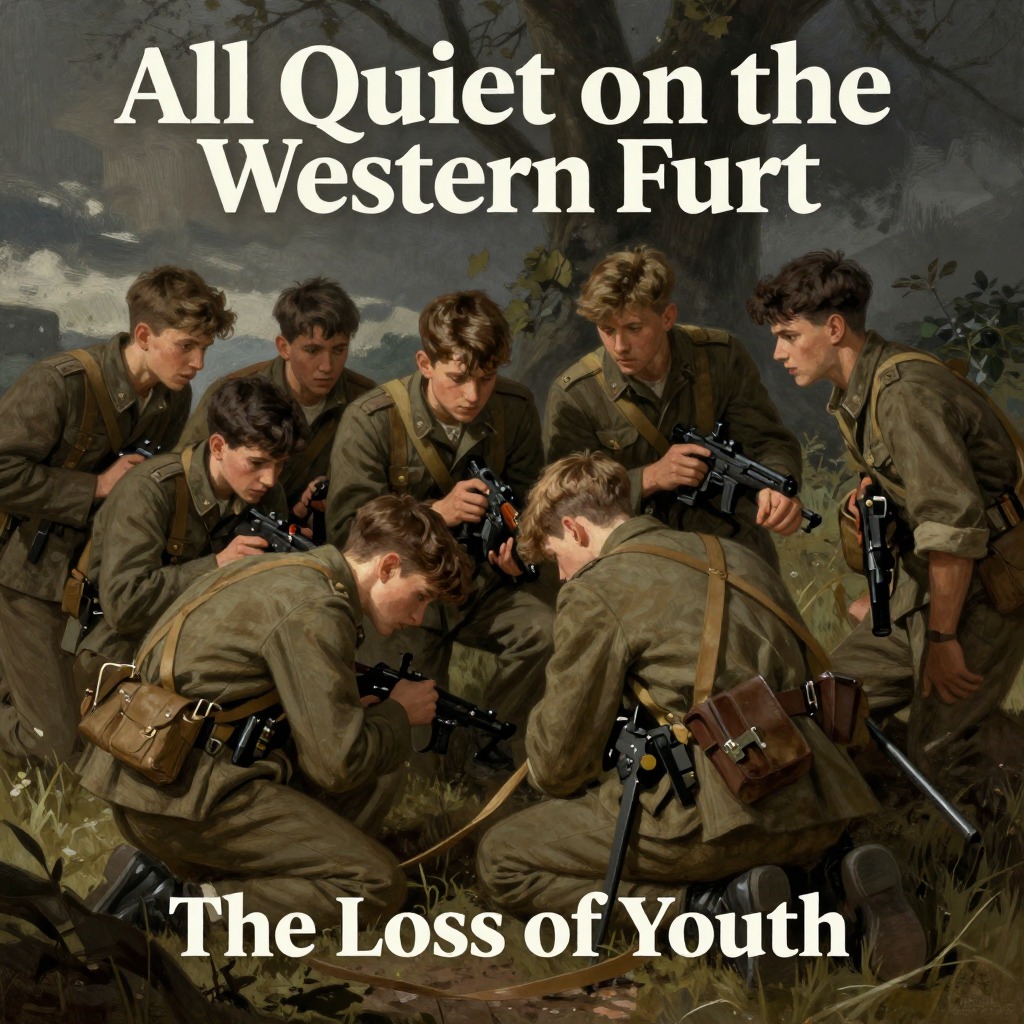
Iron Youth is the bitterly ironic label that the schoolmaster Kantorek applies to his former students who volunteered for World War I, a phrase that the soldiers themselves come to use as a mocking, sorrowful recognition of the gulf between patriotic rhetoric and the reality of the trenches. The term encapsulates the central deception of the war as experienced by Paul Bäumer and his classmates: they were told they were the heroic vanguard of a generation, only to discover that their youth had been consumed by death, mechanized slaughter, and the collapse of every ideal they had been taught to believe in.
Origin and Propaganda Function
The phrase originates with Kantorek, the stern little schoolmaster in a grey tailcoat who, during drill-time, delivered long lectures until the whole class went to the District Commandant and volunteered. He would glare at them through his spectacles and say in a moving voice: "Won't you join up, Comrades?" This was the ideological apparatus of the school, which presented the war as a noble adventure and the young men as its natural protagonists. Kantorek's rhetoric was part of a broader system that, as Paul reflects, taught that duty to one's country is the greatest thing, while the soldiers themselves were learning that death-throes are stronger. The phrase "Iron Youth" was thus a propaganda tool designed to produce willing cannon fodder, and it worked: even Joseph Behm, who hesitated and did not want to fall into line, allowed himself to be persuaded because otherwise he would have been ostracized.
The Soldiers' Bitter Rejection
When Paul, Albert Kropp, and Müller receive a letter from Kantorek sending his best wishes, Kropp reads it aloud and Müller throws his cigarette away and says: "I wish he was here." The irony is immediate and savage. Later, when Kropp reveals what Kantorek has written, he laughs and says: "We are the Iron Youth." The three of them smile bitterly. Kropp rails: he is glad that he can speak. Paul then articulates the devastating truth: "Yes, that's the way they think, these hundred thousand Kantoreks! Iron Youth. Youth! We are none of us more than twenty years old. But young? Youth? That is long ago. We are old folk." The label is thus inverted: instead of signifying strength and vitality, it becomes a marker of premature aging, of having been aged by horror beyond their years.
The Destruction of Youthful Ideals
The concept of Iron Youth is inseparable from the broader destruction of the world that the schoolmasters had built. Paul explains that for the older men, the war is but an interruption; they have wives, children, occupations, and a background so strong that the war cannot obliterate it. But for the young men of twenty, there was little else—some enthusiasm, a few hobbies, and their school. Beyond this their life did not extend, and of this nothing remains. The first bombardment showed them their mistake, and under it the world as their teachers had taught it to them broke in pieces. The training camp, with its emphasis on a bright button being weightier than four volumes of Schopenhauer, completed the process: they learned that what matters is not the mind but the boot brush, not intelligence but the system, not freedom but drill. The classical conception of the Fatherland held by their teachers resolved itself into a renunciation of personality—salutes, springing to attention, parade-marches, insults, and a thousand pettifogging details.
The Gap Between Front and Home
When Paul returns home on leave, the phrase continues to haunt the distance between his experience and civilian perception. A headmaster shakes his hand and says: "So you come from the front? What is the spirit like out there? Excellent, eh? excellent?" Paul explains that no one would be sorry to be back home, but the headmaster laughs uproariously and insists on buying him beer. The civilians, still inhabiting the world of Iron Youth rhetoric, cannot comprehend that the soldiers have been crushed without knowing it. Paul finds he does not belong home any more; it is a foreign world. The people talk too much, they have worries, aims, desires that he cannot comprehend. They feel everything with only half of themselves, the rest of their being taken up with other things. The label "Iron Youth" has become a barrier, not a bond.
The Final Irony
The ultimate refutation of the Iron Youth myth comes in the novel's closing lines. Paul, the last of the seven classmates, fell in October 1918, on a day that was so quiet and still on the whole front that the army report confined itself to the single sentence: All quiet on the Western Front. He had fallen forward and lay on the earth as though sleeping; his face had an expression of calm, as though almost glad the end had come. The Iron Youth is not a heroic warrior but a dead boy, and his death is recorded not as a tragedy but as a routine administrative note. The phrase that was meant to glorify a generation becomes, in the end, the bitterest possible epitaph for a youth that was never allowed to live.